Specifications
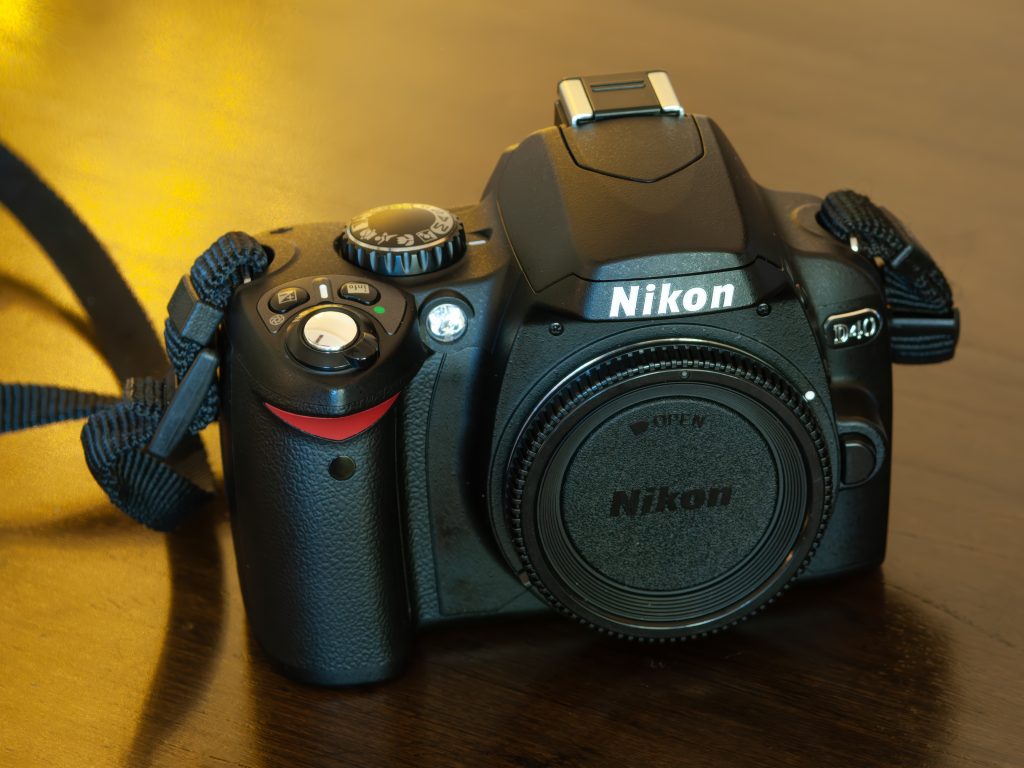
I thought I’d take a look at Nikons entry level mirrorless camera of today, the Z50ii and compare it with the D40 of 2006. The prices are surprisingly close, so much for those who say the photography hobby has gotten more expensive for beginners, and it’s clear to see that the main areas of improvement, outside of the obvious addition of video capability (obviously), are naturally the resolution, an ability to use higher ISO’s (about 5 stops worth) and much better autofocus. Battery life is the only real win for a DSLR with the mirrorless requiring the photographer to carry a second one to match it.
| Nikon D40 | Nikon Z50 ii | |
|---|---|---|
| Year Released | 2006 | 2024 |
| Price – adjusted to 2025 | N/A – Body Only $999 – with 18-55mm kit lens $1,299 – 18-55mm + 55-200mm | $1,009 – Body Only $1,149 – with 16-50mm kit lens $1,399 – 16-50mm + 50-250mm |
| Lens Mount | F-Mount – AF requires lens with built in motor – Metering only with electronic lenses | Z-Mount Use F-Mount with $250/125g adapter – same AF limitations as D40 – will meter with all lenses |
| Sensor | 6.1MP CCD DX APS-C (1.5x crop) | 20.9MP CMOS DX APS-C (1.5x crop) |
| Image Resolution | 3,008 x 2,000 pixels | 5,568 x 3,712 pixels |
| ISO Sensitivity | 200-1,600 (expandable to 3,200) | 100-51,200 (expandable to 204,800) |
| Continuous Shooting | Up to 2.5 fps | Up to 11 fps (mechanical) 30 fps (electronic, JPEG) |
| AF System | 3-area AF system Phase-detect | 231 AF points Contrast & Phase Detection |
| Subject Detection | N/A | People, Pets, Vehicles |
| Scene Modes | Auto Portrait Child Night Portrait Landscape Sports Close-up (Macro) | Auto Portrait Child Night Portrait Pet Portrait Landscape Beach/Snow Sunset Dusk/Dawn Night Landscape Party/Indoor Autumn Colors Sports Close-up (Macro) Food Blossom |
| In Camera Stabilization | N/A | Digital (for video) |
| Flash | Built-in Hotshoe No wireless flash control | Built-in Hotshoe Wireless flash control |
| Video | N/A | UHD 4K up to 60p 1080p HD up to 120p (H.265/H.264) |
| Screen | 2.5″ – 230k dot Fixed Non touch No live view | 3.2″ – 1,040k dot Vari-angle Touchscreen Live View |
| Viewfinder | Optical 95% Coverage | Electronic Screen 100% Coverage |
| Photo Assistance | N/A | Focus Peaking Manual focus magnified view |
| Storage | Single SD card slot (up to SDHC) | Dual SD card slots (UHS-II compatible) |
| Connectivity | USB 2.0 | USB-C, Wi-Fi, Bluetooth |
| Size | 126 x 94 x 64 mm (5 x 3.7 x 2.5 in) 0.76 litres | 127 x 96.8 x 66.5 mm (5 x 3.8 x 2.6 in) 0.82 litres |
| Weight | 522g (1.15 lbs) | 550g (1.21 lbs) |
| CIPA Battery Life | 470 shots | 230 shots |
Now let’s take a look the included kit lens. I have added the specs of the later VR ii version (that is what I have) in yellow:
| Nikon 18-55mm EDii DX (VR II version) | Nikon 16-50mm VR DX Z | |
|---|---|---|
| Year Released | 2006 (2014) | 2019 |
| Price – adjusted to 2025 | $189 ($339) | $329 |
| Mount | F-Mount | Z-Mount |
| Coverage | DX – 1.5x crop APS-C sensor | DX – 1.5x crop APS-C sensor |
| Focal length (DX) | 18-55mm | 16-50mm |
| Focal Length (FF Equivalent) | 27-83mm | 24-75mm |
| Aperture | f/3.5 – 5.6 | f/3.5-6.3 |
| Image Stabilization | No (Yes – up to 4 stops) | Yes – up to 4.5 stops |
| Weight | 205g (195g) | 135g |
| Dimensions | 75 x 70mm (60 x 66mm) 2.9 x 2.7 in (2.6 x 2.3 in) 0.29 litres (0.18 litres) | 70x 32mm 2.8 x 1.3mm 0.12 litres |
| Filter size | 52mm | 46mm |
Then we can take a look at the second lens most people would have to complement the kit lens and give more reach, typically available in a dual lens kit with the camera or purchased separately later. Do bear in mind that the original version included in dual lens kits with the D40 was the non VR version which I do not recommend as image stabilization is important at the long end. I added the specs of the later VR ii version (that is what I have) in yellow:
| Nikon 55-200mm VR DX (VR II version) | Nikon 50-250mm VR DX Z | |
|---|---|---|
| Year Released | 2007 (2015) | 2019 |
| Price – adjusted to 2025 | $399 ($479) | $399 |
| Mount | F-Mount | Z-Mount |
| Coverage | DX – 1.5x crop APS-C sensor | DX (1.5x crop APS-C sensor) |
| Focal length (DX) | 55-200mm | 50-250mm |
| Focal Length (FF Equivalent) | 83-300mm | 75-375mm |
| Aperture | f/4 – 5.6 | f/4.5 – 6.3 |
| Image Stabilization | Yes – up to 3 stops (up to 4 stops) | Yes – up to 5 stops |
| Weight | 335g (300g) | 405g |
| Dimensions | 99.5 x 73.6mm (83 x 70.5mm) 3.9 x 2.9in (3.2 x 2.7in) 0.42 litres (0.32 litres) | 110 x 74mm 4.4 x 3in 0.47 litres |
| Filter size | 52mm | 62mm |
It’s interesting to see how the weight of the old D40 dual lens kit at 1,063g is almost identical, in fact slightly lighter, to that of the newer mirrorless setup which comes in at 1,090g. So much for mirrorless systems being automatically lighter…
Even in size they are nearly the same, with the volume of the old DSLR and dual lens combo being 1.47 litres vs 1.41 litres for the new mirrorless. In this case the mirrorless is smaller, but only due to the trick collapsing kit lens design.
Given I have the later versions of both lenses, which do collapse slightly, I have a roughly 11% smaller and ~11% lighter (1,017g) setup than the new mirrorless system if I count the weight of the 2nd battery the mirrorless would need. Hey, when playing with an 18 year disadvantage technology wise I’ll take what wins I can!
I don’t have time to put it through its paces right away due to some unfortunate family matters, but I will take some test shots in the next couple of weeks to see what it can do…
My Experience
I was thrilled with the quality of the photos I got from the D40 and it was lightning fast vs my compact, and it became a gateway drug into photography. When I had the compact camera I would use it to take photographs of my trips, whereas with the DSLR I took trips specifically to take photographs. I started taking it with me to work, commuting in extremely early so I could wander around London at sunrise and later at sunset. I started buying books like “The Photographers Eye” to understand composition and what actually makes a good photograph.
What about my initial worry, the limited resolution? The 6 megapixels were no problems at all, bear in mind I had a particularly expensive and high res Apple screen at that time at 1920×1200 resolution which was around 2 megapixels or 1/3rd of the cameras output so had to zoom and scroll as much as you would today editing a 24 megapixel image on a 4k monitor (which is 8 megapixels).
I started taking so many photos that within a year I felt I had outgrown the D40, wanting more direct controls, more focusing points for sports tracking along with a faster frame rate. I can see now that there was also some GAS (Gear Acquisition Syndrome) going on as well plus my business had been doing well and I now had some money burning a hole in my pocket…
I traded the D40 in at Greys of Westminster for a D200 and an 18-200mm VR lens (a massive investment of about $3,200 in 2025 money) and as much as I have an even greater attachment to my D200 I do have fond memories of this light, simple, quality beginners kit. I started to wonder… would it wow me again today, especially with modern post processing software, given I have been impressed by some old digital point and shoots in this manner? Only one way to find out… so I went on the hunt for one!
Be the first to comment